An honest guide from a Toronto student figuring out the creator economy.
The Creator Economy Is Bigger Than Ever
If you’re an artist today, you’re actually living in one of the best eras in history to monetize creativity.
The global creator economy was valued at around $205 billion in 2024 and is projected to reach over $1.3 trillion by 2033, showing just how rapidly online creative careers are growing (Grand View Research, https://www.grandviewresearch.com/industry-analysis/creator-economy-market-report). Platforms like YouTube, Instagram, Etsy, and Patreon have made it easier than ever for artists to build audiences and sell their work directly online.
In fact, there are now over 400 million creators worldwide, many of whom earn income through digital products, commissions, or content creation (Market.us, https://market.us/report/creator-economy-market/). Social platforms and online marketplaces have opened entirely new career paths that didn’t exist even ten years ago.
That being said, the creator economy can also be competitive. Research suggests that only about 4% of creators earn over $100,000 per year, while many artists are still building sustainable income streams (Awisee, https://awisee.com/blog/creator-economy-statistics/). Because of this, most successful artists rely on multiple income streams rather than just one platform or product.
As someone studying in Toronto and constantly meeting creative people at markets, art fairs, and student events, I see this all the time. Some artists sell prints at places like Kensington Market or local pop-ups, while others run online stores, build audiences on Instagram, or sell digital downloads globally.
So if you’re wondering:
How do artists actually make money online?
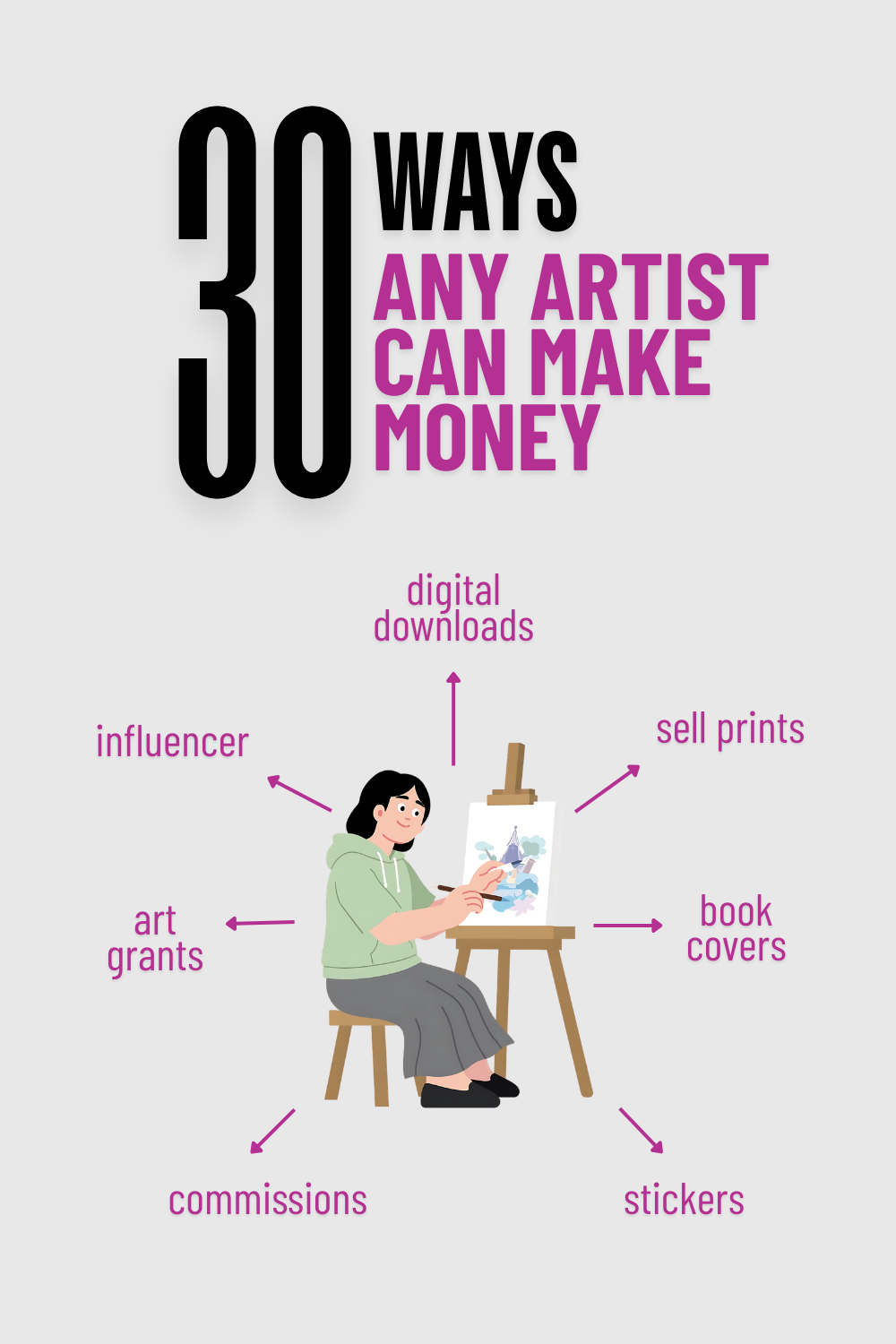
Here are 30 real ways artists are earning income today — including platforms that actually pay.
1. Sell Original Artwork
Selling original artwork is one of the most traditional ways artists make money. This includes paintings, drawings, sculptures, or digital pieces sold directly to collectors or buyers. Many artists today use platforms like Etsy, Shopify, or Instagram to showcase and sell their work globally.
To start, create a portfolio of your best pieces and photograph them professionally. Posting consistently on social media and engaging with art communities can help you build an audience that eventually becomes buyers.
Platforms:
Etsy
Instagram art marketplace examples
Artist discussion:
Reddit artists discussing selling originals:
2. Sell Art Prints
Art prints allow you to reproduce your original artwork and sell multiple copies at a lower price point. This makes your work more accessible while allowing you to scale your income. Many artists sell prints through platforms like Etsy, InPrnt, or their own website.
High-quality printing and good packaging are important for customer satisfaction. Offering different sizes or limited-edition prints can also increase perceived value.
Reddit thread on selling prints:
3. Sell Digital Downloads
Digital downloads are a popular way for artists to earn passive income. Products like printable wall art, phone wallpapers, coloring pages, or digital illustrations can be sold without needing to ship physical products.
Platforms like Etsy, Gumroad, or Ko-fi make it easy to sell digital files to customers worldwide. Once uploaded, the files can generate income repeatedly with minimal effort.
Platforms:
Ko-fi
Gumroad
Etsy digital products
Example YouTube explanation:
4. Sell Stickers
Sticker businesses have grown rapidly in the online art community. Illustrators often create unique designs that can be printed as stickers and sold individually or in themed packs.
Many artists sell stickers through Etsy, Shopify, or print-on-demand services. Because stickers are affordable and easy to ship, they can attract a large number of buyers.
5. Apply for Art Grants
Many organizations provide grants to help artists fund creative projects. These grants may support materials, studio space, or research.
Organizations:
Aaron Siskind Foundation
Clark Hulings Fund
Grant advice discussion:
6. Take Custom Art Commissions
Commission work involves creating custom artwork based on a client’s request. This might include portraits, pet illustrations, character designs, or personalized gifts.
Artists typically advertise commission openings on platforms like Instagram, Twitter, or artist websites. Clearly outlining pricing, turnaround time, and revision policies helps set expectations for clients.
Platforms:
Fiverr
Artist commissions Instagram tag
7. Offer Pet Portraits
Pet portrait commissions are extremely popular online. Many artists build entire businesses painting pets for customers.
Platforms:
Etsy pet portrait market
Artist experiences:
8. Sell Fan Art (Where Allowed)
Fan art can be sold at conventions or online communities where permitted. Many artists build large audiences through fan art of popular franchises.
Example artists on Instagram:
https://www.instagram.com/explore/tags/fanart/
Artist discussion:
https://www.reddit.com/r/artbusiness/comments/1mbk3h/is_selling_fan_art_legal/
9. Sell Merchandise With Your Art
Artists can expand their brand by selling merchandise featuring their artwork. Common products include apparel, tote bags, mugs, phone cases, and posters.
Print-on-demand services such as Redbubble, Society6, and TeePublic allow artists to upload designs that are automatically printed on products when purchased. This eliminates the need for inventory or shipping management.
Artist experiences:
10. License Your Artwork
Art licensing allows companies to legally use your artwork on their products in exchange for royalties or licensing fees. Your designs could appear on items like stationery, home décor, or clothing.
To begin licensing your work, create a portfolio showcasing patterns, illustrations, or designs suitable for commercial products. Many artists connect with brands through licensing agencies or industry trade shows.
Information resource:
https://www.artlicensinginfo.com
Artist discussion:
11. Sell Procreate Brushes
Digital artists often create custom brushes used for digital painting or illustration. These tools help other artists achieve specific textures, effects, or artistic styles.
Brush packs are commonly sold through platforms like Gumroad or Etsy. Creating tutorials or demonstrations can help showcase how your brushes work and attract buyers.
Platforms:
Gumroad
Creative Market
YouTube example:
12. Sell Design Assets
Artists can also sell digital assets used by other creatives, such as textures, icons, patterns, or graphic elements. These assets are commonly used in graphic design, web design, and digital illustration.
Platforms like Creative Market, Gumroad, and Envato allow artists to sell these digital resources to designers and businesses.
Platforms:
Creative Market
Envato Market
Artist discussion:
13. Start an Online Art Store
Creating your own online store allows you to sell artwork, prints, or merchandise directly to customers. Platforms like Shopify, Squarespace, or WooCommerce make it relatively easy to build a professional storefront.
Running your own shop gives you full control over branding, pricing, and customer relationships.
Platforms:
Shopify
Squarespace
YouTube tutorial:
14. Sell NFTs or Digital Collectibles
Some digital artists explore blockchain-based artwork and collectibles. NFTs allow artists to sell digital pieces with proof of ownership recorded on a blockchain.
While the market can be volatile, it remains an experimental space where some artists have built new revenue streams.
Based on what I have read online, this may be a but controversial as well.
Platforms:
OpenSea
Discussion thread:
15. Start a Patreon
Patreon allows artists to earn recurring monthly support from fans.
Platform:
https://www.patreon.com
Example artist Patreon:
https://www.patreon.com/loish
Discussion:
https://www.reddit.com/r/Patreon/comments/13tkx9/artists_using_patreon/
16. Accept Tips Through Ko-fi
Patreon allows artists to earn recurring monthly income from fans who support their work. Supporters typically receive exclusive content, tutorials, early artwork access, or behind-the-scenes posts.
Many artists build Patreon communities where fans feel more connected to their creative process.
17. Create an Art YouTube Channel
YouTube is a popular platform for artists who enjoy documenting their creative process. Artists can share tutorials, studio vlogs, or time-lapse videos of their artwork.
Once a channel grows, income can come from advertising revenue, sponsorships, and affiliate links.
Example creators:
Jazza
Ten Hundred
YouTube creator income discussion:
18. Become an Art Influencer
Artists who consistently share their work on platforms like Instagram, TikTok, or Pinterest can build large audiences. Brands often collaborate with creators to promote art supplies or creative tools.
These partnerships may involve sponsored posts, affiliate links, or product collaborations.
Example artists:
https://www.instagram.com/samdoesarts
https://www.instagram.com/loish
19. Sell Online Art Courses
Artists with specialized skills can create structured courses teaching techniques like watercolor painting, digital illustration, or drawing fundamentals.
Courses can be hosted on platforms like Skillshare, Teachable, or Kajabi and sold to students around the world.
Platforms:
Skillshare
Teachable
Example course creator:
20. Teach Live Workshops
Live workshops allow artists to teach techniques in real time through virtual classes or in-person events. Workshops can focus on specific topics like portrait drawing or abstract painting.
Many artists host workshops through Zoom, community art centers, or local studios.
Workshop booking platform:
https://www.eventbrite.com
Artist workshop discussion:
21. Sell Art Tutorials
Short tutorials or downloadable guides can help beginners learn artistic techniques. These might include step-by-step painting guides, drawing exercises, or digital art workflows.
Tutorials can be sold as PDFs, video lessons, or bundled learning kits.
Niche Platforms:
Gumroad
Example tutorial creators:
22. Write an Art Blog
Artists who enjoy writing can build blogs that share tutorials, art career advice, or creative inspiration. Blogs can generate income through advertising, affiliate links, and digital product sales.
Over time, a blog can also help establish credibility and attract opportunities like speaking or collaborations.
23. Start a Newsletter
Email newsletters allow artists to build direct relationships with their audience. Many artists share exclusive updates, early access to artwork, or personal insights with subscribers.
Newsletter platforms like Substack or Beehiiv can also provide monetization options.
Platforms:
Substack
24. Sell at Local Art Markets
Local markets and craft fairs can be great opportunities to sell artwork in person. These events allow artists to connect directly with buyers and build local recognition.
Many cities host regular creative markets where artists can rent small booths to sell prints, stickers, or original work.
Toronto examples:
Kensington Market
Trinity Bellwoods Market
25. Sell at Conventions
Comic conventions and pop culture events often feature artist alleys where illustrators sell prints and merchandise. These events can attract thousands of potential buyers in a single weekend.
Many artists also gain social media followers through these events.
Example:
Fan Expo Toronto
Artist Alley discussion:
26. Partner With Galleries
Working with galleries can help artists reach collectors and art buyers. Galleries typically take a commission from each sale in exchange for exhibiting and promoting the work.
Building relationships with gallery curators can open doors to exhibitions and new audiences.
27. Sell Art Subscriptions
Some artists offer subscription services where customers receive new artwork every month. This might include prints, stickers, postcards, or small collectibles.
Subscription models help create predictable recurring income.
Platforms:
Patreon
Cratejoy
28. Design Book Covers
Publishers and independent authors often hire artists to design book covers. This type of work combines illustration with graphic design and can pay well depending on the project.
Freelance marketplaces and author communities are good places to find these opportunities.
Platforms:
Upwork
Discussion:
29. Work in Concept Art
Concept artists create visual designs for video games, films, and animation. This field often involves designing characters, environments, or props used in production.
Many concept artists build portfolios and find work through studios or freelance contracts.
30. Sell Creative Templates
Artists can design templates for planners, social media graphics, or digital journals. These products are especially popular among content creators and small business owners.
Templates are typically sold through Etsy, Creative Market, or personal websites and can generate ongoing passive income.
Platforms:
Creative Market
Etsy
Discussion:
Making money from art today looks very different than it did even a decade ago. Thanks to the internet and the growth of the creator economy, artists are no longer limited to galleries or traditional commissions. From selling prints and digital downloads to teaching online courses, building Patreon communities, or sharing work on platforms like Instagram and YouTube, there are more opportunities than ever to turn creativity into income.
That being said, most successful artists don’t rely on just one method. Instead, they combine several income streams—such as commissions, merchandise, tutorials, and content creation—to build a more stable and sustainable art career. If you’re just starting out, focus on experimenting with a few platforms that match your style and audience, and gradually expand as you learn what works best for you.
As a student in Toronto surrounded by creative communities, markets, and online artists doing incredible things, it’s inspiring to see how many different paths there are. Whether you want to sell your work locally at art markets or reach a global audience online, the most important step is simply starting, sharing your work, and staying consistent. Over time, those small steps can grow into real opportunities—and real income—from your art. 🎨